The rise of experience-driven industries
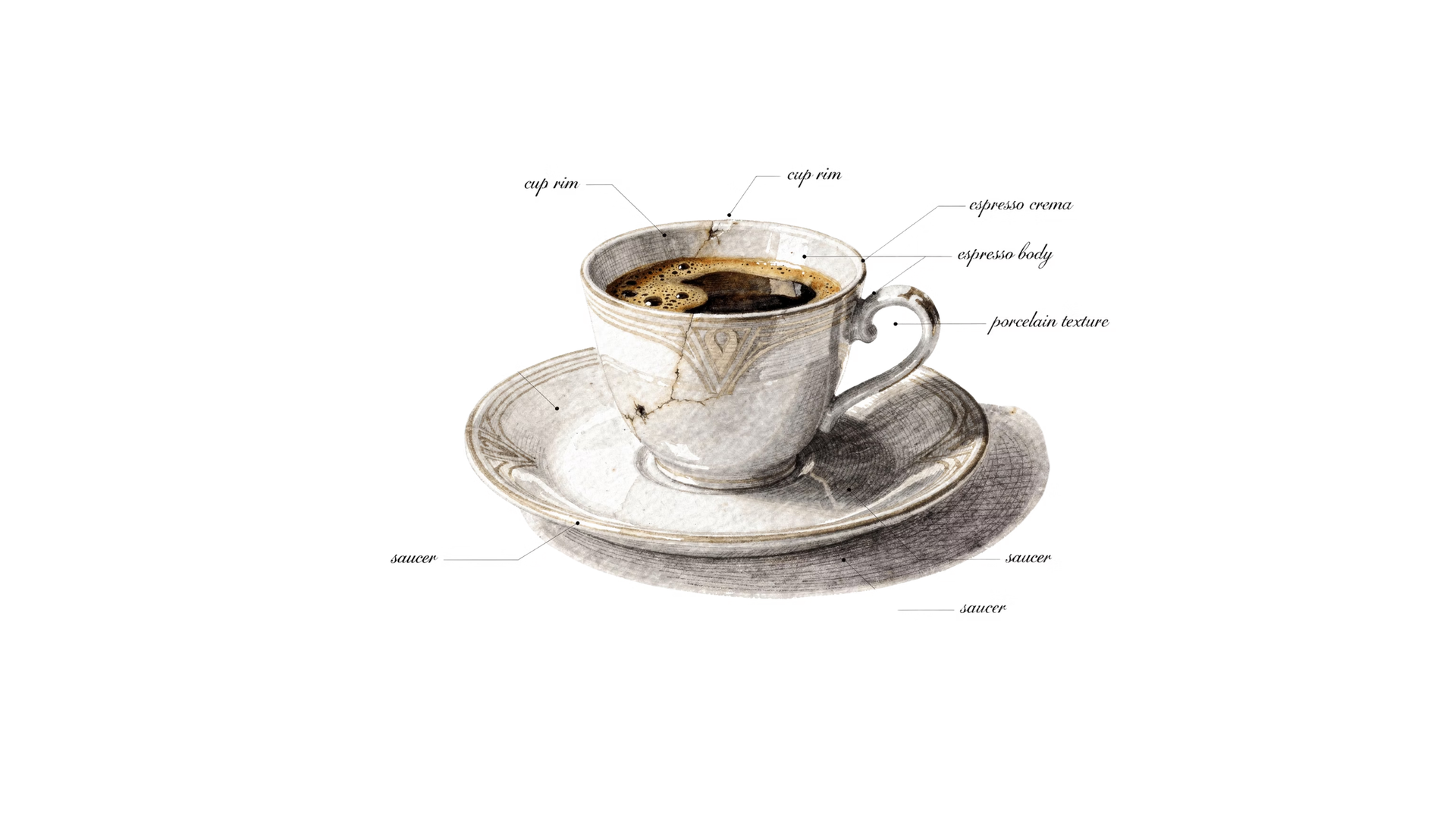
I focus on experience-driven industries: food and beverages, wellness, entertainment, tourism, health. Businesses that both fulfill a need ("I am hungry") and provide an impactful experience ("I want to sit in a unique venue and enjoy every bite"). One without the other would lead to bankruptcy.
These industries make a third of the world economy and they are the fastest growing segment. They are also among the most chaotic industries in the world. They are perfect case studies to challenge how you think about business, strategy and decision making: the classic executive handbook does not work for most executives in these fields. They need a new executive approach.
1/ Enter the Experience Economy
In 1998, B. Joseph Pine II and James H. Gilmore published an article in Harvard Business Review that would redefine how we think about value: "Welcome to the Experience Economy."
The thesis was sharp: the economy moves along a progression. First commodities (raw materials). Then industrial goods. Then services. Then experiences. At each step, the perceived value to the customer increases and commoditization of the previous level completes. We value a great exotic AirBnB much more than what we value a great Motel.
A coffee as a commodity costs a few cents. As a roasted and packaged product, a couple of dollars. As a service at a bar, two or three dollars. As an experience in an environment designed to make you feel something (a Starbucks, a specialty cafe, the Palm Court at the Ritz), the price climbs again, and the customer pays willingly. Not for the coffee, but for how they drink it, where they drink it, what they feel while drinking it.
Pine and Gilmore identify four dimensions of experience, the "4E" model:
- Entertainment (passive absorption)
- Educational (active learning)
- Escapist (active immersion),
- Esthetic (passive immersion in a curated environment).
Companies that hit the "sweet spot" at the center of these four dimensions create memorable experiences. And memorable experiences are the product.
In the 2020 re-release of their book, Pine and Gilmore add a fifth level: Transformation. That's the most interesting in my opinion. Think of a transformative training program, an executive retreat that changes the way you think, an educational program that reshapes how you eat.
People prefer to pay for experiences, and if their perceived impact lasts longer, they are willing to commit even more.
2 / What are Experience-Driven Industries
Experience-Driven Industries (EDI) are sectors where the primary value isn't the product or service, but the experience the customer lives during and after interacting with the company. In these industries, success isn't measured solely by efficiency, quality, or price but by the impact the customer takes home.
Here are a few among the main sectors and their characteristics:
- Food & Beverage — Restaurants, bars, cafes, experiential food delivery. The food is the pretext; the atmosphere, the storytelling, the attention to detail are the real product. Example: Noma (Copenhagen) transformed dinner into a multisensory experience combining education, escapism, and aesthetics. Every dish tells a story of the territory.
- Hospitality & Travel — Hotels, resorts, tourism experiences. You're not selling a room. You're selling how the customer will feel from check-in to check-out. Example: Airbnb Experiences shifted value from accommodation to local experience, offering activities led by residents that turn travel into something personal and unrepeatable.
- Entertainment & Media — Film, music, gaming, live events, theme parks. Emotional engagement is everything. Example: Disneyland is the ultimate case study. Customers are "guests." Every sensory detail (smells, sounds, lights) is designed to create a memory. Walt Disney understood the experience economy 50 years before anyone theorized it.
- Wellness & Fitness — Spas, yoga, boutique fitness, retreats, wellness apps. The customer isn't buying an exercise. They're buying the feeling of becoming a better version of themselves. Example: Peloton combined high-end equipment with live streaming and community, transforming home workouts into an immersive and social experience.
- Experiential Retail — Physical stores competing with e-commerce not on price, but on the purchasing experience. Example: Apple Store isn't a shop. It's an educational and aesthetic space where you touch, learn, and connect with technology. The product is almost secondary to the experience.
- Education & Personal Development — Courses, apps, training programs that sell personal and professional transformation. Example: MasterClass sells the experience of learning directly from world-renowned experts, in a cinematic format that is as much entertainment as education.
3 / The 5 defining characteristics of EDI
- The product is the memory. The customer pays for what they'll feel and remember, not for what they'll receive in a tangible sense. If they don't remember it, it didn't work.
- Personalization is structural, not optional. The experience can't be identical for everyone. It must adapt to each customer, their tastes, the moment, the context. Pine and Gilmore call "mass customization" the antidote to commoditization.
- Engagement is multisensory. Successful EDIs activate multiple senses simultaneously. Sight, hearing, smell, touch, taste. Disney designs the scents. Starbucks designs the background music. Every stimulus is intentional.
- Thematic coherence is everything. The best experiences have a clear theme that organizes every element. The theme doesn't need to be explicit or fantastical. It can be subtle: "elegant simplicity" (Apple), "authentic adventure" (Airbnb), "the third place between home and office" (Starbucks).
- Satisfaction is subjective. Unlike a product that works or doesn't, an experience is evaluated emotionally. Two customers in the same room can have completely different experiences. This makes measuring success radically more complex.
4 / The operational tension: professionalism vs. experience
This is where things get complicated.
On one hand, an EDI company must function like any serious organization: rigorous financial management, efficient operational processes, clear strategy, defined accountability. A restaurant that creates wonderful experiences but can't manage its costs closes in 18 months.
On the other hand, customer satisfaction isn't measured with a yes or no. It's not like selling software that fulfills its function or doesn't. The experience is subjective, emotional, contextual. A customer can have a mediocre experience for reasons that have nothing to do with the company (their mood, their expectations, the weather). Another can have an extraordinary experience thanks to an unexpected detail that no process could have planned.
This tension is real and has no simple solution.
Take Starbucks. The company built its empire on the "third place" experience. But to scale to over 35,000 locations worldwide, it had to standardize processes, reduce variability, optimize costs. Every time Starbucks pushes on operational efficiency (app orders, drive-through, staffing reduction), it risks eroding exactly the experience that justifies its premium pricing. It's a permanent tension.
Disney manages the same dynamic on an even larger scale. Every park is an enormously complex logistics operation, with thousands of employees, queue management systems, constant maintenance. But the moment efficiency becomes visible to the guest, the magic breaks. Disney invests enormous resources to hide the operational infrastructure: the tunnels under Magic Kingdom, employee costumes, waste disposal systems. The operation must be impeccable. And invisible.
On a smaller scale, a local wellness center will invest in community engagement and in developing genuine personal relationships with the clients. That means that employee turnover, rising fees because of rising costs or any other change is a potential risk to their business model - and not only for financial reasons.
Every single experience-driven business requires a specific business model that marries professional excellence with impactful products. It can be a happy marriage, but it requires a special kind of commitment.
5 / What an EDI executive needs to succeed
Executives in Experience-Driven Industries need competencies that are rarely taught together in traditional training programs:
- Operational rigor and experiential sensitivity. They must be able to read a balance sheet and read a room. They must understand when a process needs optimization and when it should be left "imperfect" because the imperfection is part of the experience.
- Systems thinking. The customer experience is the result of dozens of interconnected micro-interactions. Modifying one element (the menu, the lighting, the cancellation policy) can have unpredictable cascading effects on everything else.
- Ability to navigate ambiguity. No single KPI captures the quality of an experience. The manager must learn to work with qualitative data, subjective feedback, intuitions.
- Permanent generative tension. And this is where the circle closes. The EDI manager can't be a classic manager. They must be a professional in continuous exploratory tension. They must continuously absorb new stimuli (what competitors are doing, how tastes are changing, which technologies are emerging), reflect on their meaning, and experiment with integrations in their own context.
Operational management is the floor. Generative exploration is the ceiling. The work is in continuously building between the two.
6 / Where EDIs are heading: between extreme personalization and brand authenticity
The future of Experience-Driven Industries moves along two axes that appear to be in tension.
The first is technological personalization. AI is making it possible to personalize experiences at levels unthinkable even five years ago. Carnival Cruise Lines, through its MedallionClass technology (inspired by Disney's MagicBand), can know that when you're at the pool with your kids you prefer an iced tea with no lemon, but when you're at the bar with friends you prefer a mojito with extra lime. Netflix generates over $1 billion annually from its personalized recommendation system. Starbucks uses predictive AI to anticipate customer preferences based on time of day and weather.
The second axis is brand authenticity. In an overstimulated world, consumers are gravitating toward simpler, more intentional, and genuine experiences. The trend of "quiet luxury," "slow living," and craftsmanship isn't a passing fad. It's a reaction to excess. Lush puts the name and face of the artisan on every handmade product. Farm-to-table restaurants tell the story of every ingredient. Marriott's "Good Travel" program offers guests the chance to participate in environmental conservation initiatives.
The challenge for the EDIs of the future will be combining these two axes: using technology and human agency to personalize the experience without losing the brand authenticity that makes it memorable. Those who succeed at this synthesis will define the next generation of benchmark companies.
Sources:
- Pine, B.J. & Gilmore, J.H., "Welcome to the Experience Economy", Harvard Business Review, July-August 1998 — hbr.org
- Pine, B.J., "Summary of The Experience Economy", Transformations Book Substack, March 2024 — transformationsbook.substack.com
- Wikipedia, "Experience Economy" — en.wikipedia.org
- World Economic Forum, Future of Jobs Report 2025 — weforum.org
- Innovationedge, "Predicting the Biggest Trends Across Industries in 2025" — innovationedge.com
- Zendesk, "What is the experience economy?" (January 2025) — zendesk.com
Unorthodox business analyses, tech picks and a dose of healthy sarcasm. Elevate your executive skillset for free, every second Wednesday in your inbox.
Member discussion